Plain-language answer
An epiretinal membrane is a thin layer of scar-like tissue on the surface of the macula. It can wrinkle the retina and cause distortion, blurred central vision, or difficulty reading.

Evaluation and treatment for macular pucker and epiretinal membrane causing distortion, blurred vision, or difficulty reading.
Serving patients searching for a Dallas Retina Specialist, Fort Worth Retina Specialist, and North Texas Retina Specialist.
An epiretinal membrane is a thin layer of scar-like tissue on the surface of the macula. It can wrinkle the retina and cause distortion, blurred central vision, or difficulty reading.
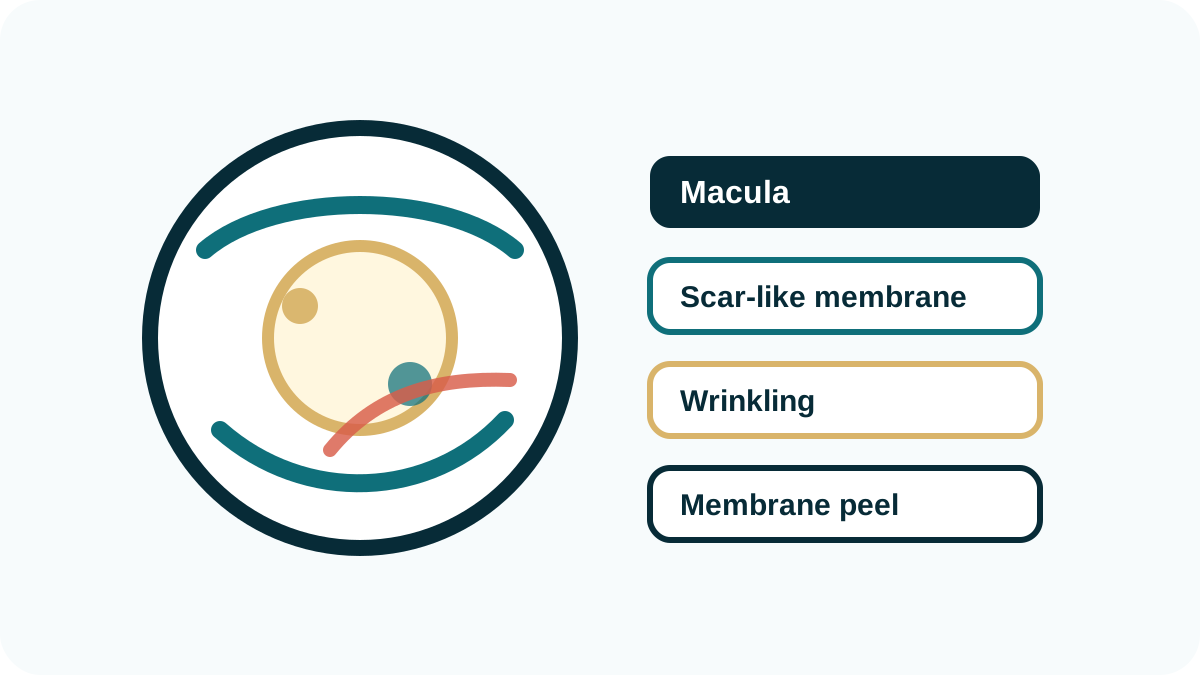
Epiretinal membranes are sometimes called macular puckers. They can occur after age-related vitreous separation, retinal tears, inflammation, diabetes, vein occlusion, trauma, or prior eye surgery. Many are mild and can be monitored, while others create enough traction to affect daily visual function.
Common symptoms include wavy lines, blurry central vision, double or ghosted letters, difficulty reading, and trouble with fine detail. Symptoms may be more noticeable when comparing one eye with the other.
OCT imaging shows the membrane, retinal wrinkling, thickening, and any associated macular edema or traction. The decision to monitor or consider surgery depends on symptoms, vision, OCT anatomy, and how much the membrane affects daily activities.
Mild epiretinal membranes may be followed with periodic OCT imaging. Visually significant membranes can be treated with pars plana vitrectomy and membrane peeling. Recovery is usually gradual, and distortion may improve over months, though it may not disappear completely.
Dr. Chavala helps patients weigh the benefits and risks of surgery based on visual needs, OCT findings, other eye conditions, and expected recovery. This is especially important for patients who drive, read extensively, perform detailed work, or have disease in the fellow eye.
Epiretinal membrane surgery is a quality-of-vision decision as much as an eye-chart decision. Some patients see 20/30 but cannot read comfortably because letters are warped; others have mild OCT findings and are better served by observation. Dr. Chavala reviews the patient’s symptoms, OCT anatomy, visual needs, and other eye conditions before recommending surgery.
When membrane peel surgery is appropriate, the discussion includes expected recovery time, the possibility of residual distortion, cataract considerations, and follow-up imaging. This individualized approach helps patients decide when the potential benefit of surgery outweighs the risks and inconvenience of recovery.
Care also includes checking for related causes such as retinal tears, vascular disease, inflammation, or prior surgery. When observation is chosen, repeat OCT imaging helps determine whether the membrane is stable, slowly changing, or beginning to affect retinal architecture enough to reconsider surgery.
Retina of North Texas also reviews how symptoms affect daily tasks such as reading, driving, computer work, and fine-detail activities. This context matters because treatment decisions are based on the patient’s functional vision, not only on a number from the eye chart.
No. Many are mild and can be monitored. Surgery is considered when distortion, blur, or retinal traction meaningfully affects vision or daily function.
Glasses may help if refractive error is present, but they usually cannot correct distortion caused by retinal wrinkling.
Vision often improves gradually over weeks to months. The degree of improvement depends on membrane severity, duration, and retinal health.
Recurrence can occur but is not common. Continued monitoring is important after surgery or observation.
Review the warning signs and conditions that should prompt retinal evaluation.