Plain-language answer
Age-related macular degeneration (AMD) is a common retinal disease that affects the macula, the central part of the retina responsible for reading, driving, recognizing faces, and detailed vision. AMD occurs as dry AMD, which usually progresses gradually, or wet AMD, in which abnormal blood vessels leak fluid or blood and can cause rapid vision loss if not treated promptly.
What it is
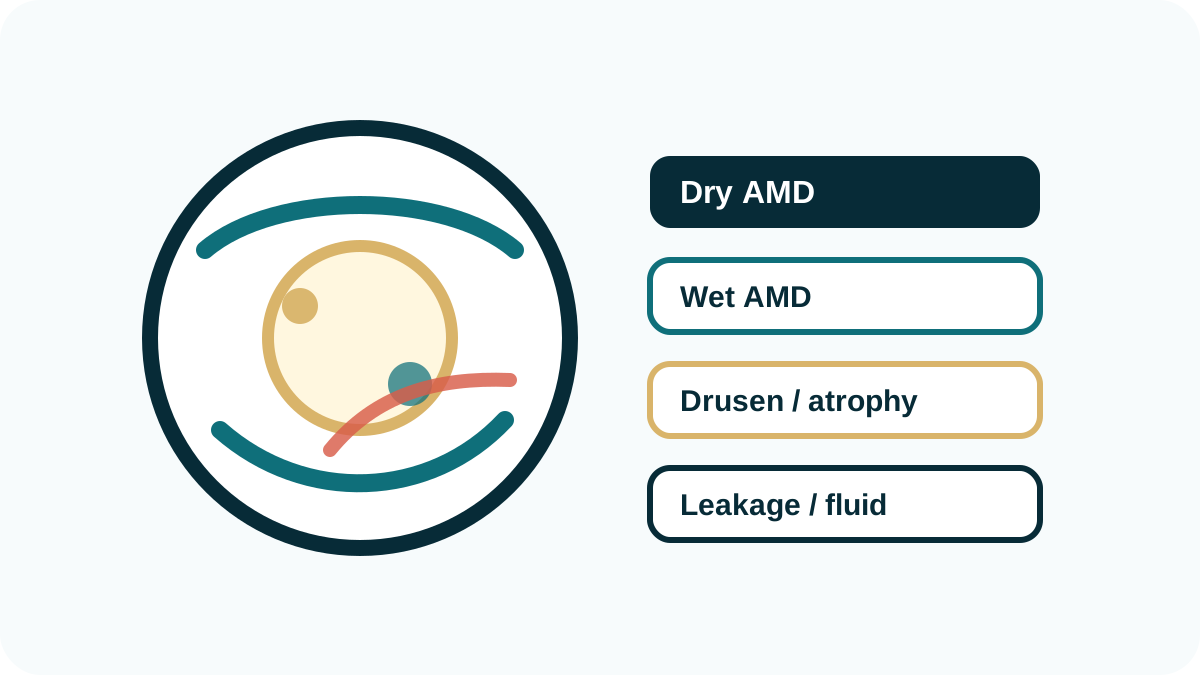
Dry AMD is the more common form and involves gradual changes in the macula, often progressing through early, intermediate, and advanced stages. Advanced dry AMD can lead to geographic atrophy, where areas of retinal support tissue and photoreceptors are lost, causing central or paracentral blind spots.
Wet AMD develops when abnormal blood vessels grow beneath the retina and leak fluid or blood. This can cause sudden distortion, blurred central vision, or a dark spot in the center of vision. Wet AMD can develop in an eye that previously had only dry AMD, which is why regular monitoring matters even when disease appears stable.
Symptoms
Early AMD often causes no noticeable symptoms. As it progresses, patients may notice blurred central vision, straight lines appearing wavy or distorted, a blurry or dark spot in the center of vision, difficulty recognizing faces, or needing brighter light to read.
New distortion, a sudden change in central vision, or a new central blind spot should be evaluated promptly because it can signal conversion from dry AMD to wet AMD.
Diagnosis
Diagnosis starts with a dilated eye exam to examine the macula directly. OCT imaging is also central to AMD care. OCT is a fast, non-invasive scan that shows the retina’s layers in cross-section and can detect fluid, thinning, drusen-related changes, or signs of advanced disease.
Fluorescein angiography or OCT angiography may be used when wet AMD is suspected or when the diagnosis is unclear. An Amsler grid may also be used at home between visits to help patients notice new distortion early.
Treatment options
Dry AMD care focuses on monitoring, reducing modifiable risk factors, and AREDS2 vitamin supplementation when appropriate. Although there is currently no cure that restores vision already lost from dry AMD, treatments are available for selected patients with geographic atrophy, and regenerative medicine remains an active area of research. AREDS2 is most often recommended for intermediate AMD or certain higher-risk patterns and should be discussed with an eye doctor before starting.
Wet AMD is treated with anti-VEGF injections, which reduce abnormal blood-vessel leakage and retinal swelling. Treatment intervals are individualized using OCT findings, vision, and disease activity. Many patients begin with frequent treatment and then move to longer intervals once the retina is stable.
Why choose Retina of North Texas for macular degeneration
Macular degeneration care depends on detecting progression early, especially the transition from dry AMD to wet AMD. Prompt evaluation and treatment of wet AMD can help preserve more vision than treatment started after a delay.
Dr. Chavala uses OCT-guided evaluation to track subtle changes over time and determine when monitoring is sufficient versus when injection treatment should begin. For patients who need injections, he brings extensive high-volume experience, with an in-practice safety rate exceeding 99%.
Because Dr. Chavala actively conducts retinal research while maintaining a busy clinical practice, patients receive care informed by both today’s evidence-based treatments and an understanding of emerging therapies under investigation.
- Fellowship-trained surgical retina specialist
- More than 15,000 retinal procedures and surgeries performed
- In-practice eye-injection safety rate exceeding 99%
- Same-clinic-day availability when possible for urgent symptoms
- NIH- and National Eye Institute-funded physician-scientist
- Four North Texas and East Texas locations with direct online scheduling
Research perspective: dry AMD and retinal repair
Macular degeneration research is also part of Dr. Chavala’s academic work. His research background includes regenerative approaches for retinal disease, an area especially relevant to dry AMD and geographic atrophy.
Current patient care remains grounded in proven evaluation, imaging, monitoring, and injection treatment, while research offers a longer-term view of where retinal repair may be heading. This research perspective does not replace evidence-based AMD care today, but it gives patients access to a retina specialist who understands both current treatment and the future direction of retinal repair.
Frequently asked questions
Is macular degeneration hereditary?
Family history increases risk, and genetic and environmental factors both play a role. Relatives of patients with AMD may benefit from earlier or more frequent screening, especially if they have symptoms or known risk factors.
How fast does wet AMD progress?
Wet AMD can cause vision changes within days to weeks. New distortion, sudden central blur, or a dark spot in the center of vision should be evaluated promptly rather than monitored at home.
Can diet or lifestyle affect macular degeneration?
Yes. Smoking, diet, cardiovascular health, and nutritional status can influence AMD risk and progression. AREDS2 vitamin supplementation is recommended for some patients with intermediate-stage AMD.
Does dry AMD always turn into wet AMD?
No. Many patients have stable dry AMD for years. Regular monitoring is still important because wet AMD can develop in some patients and may cause rapid vision changes.
Not sure whether you need a retina specialist?
Review the warning signs and conditions that should prompt retinal evaluation.
When should you see a retina specialist? →