Plain-language answer
Uveitis is inflammation inside the eye. When inflammation affects the retina, blood vessels, or optic nerve region, a retina specialist may be needed to diagnose complications, control swelling, and coordinate treatment.

Retina-focused evaluation of ocular inflammation, including posterior uveitis, retinal vasculitis, macular swelling, and inflammatory complications.
Serving patients searching for a Dallas Retina Specialist, Fort Worth Retina Specialist, and North Texas Retina Specialist.
Uveitis is inflammation inside the eye. When inflammation affects the retina, blood vessels, or optic nerve region, a retina specialist may be needed to diagnose complications, control swelling, and coordinate treatment.
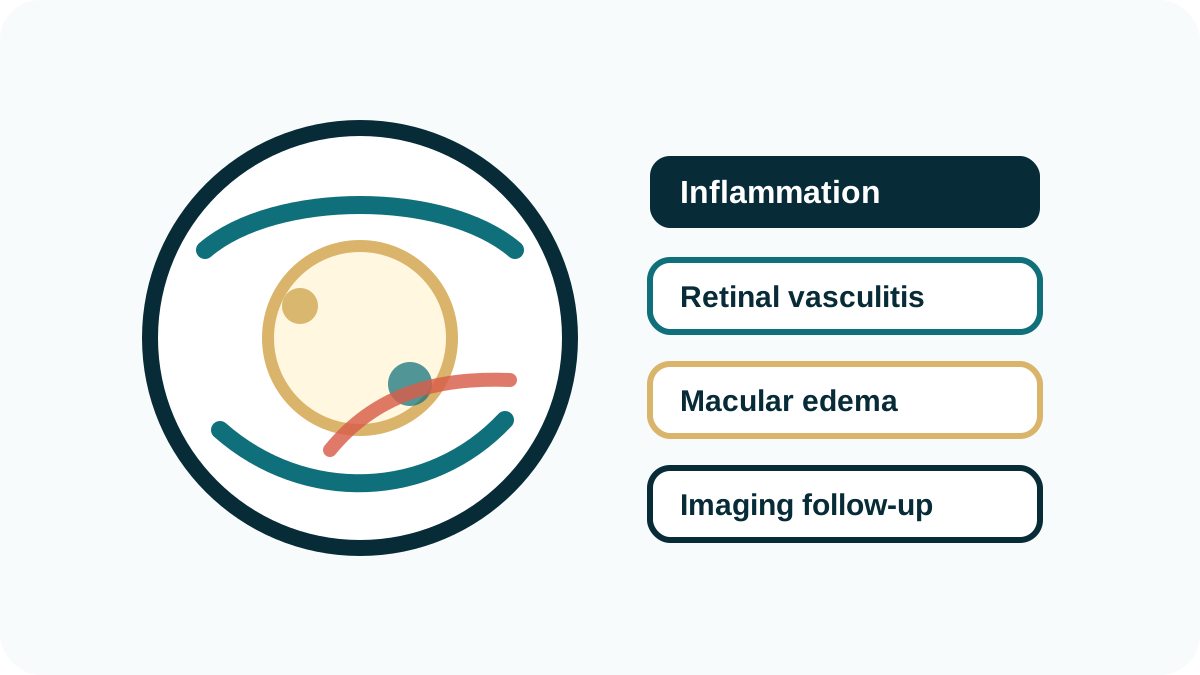
Uveitis can affect the front, middle, or back of the eye. Retina of North Texas focuses especially on posterior uveitis, retinal vasculitis, inflammatory macular edema, chorioretinal lesions, and complications that threaten retinal function.
Symptoms may include blurry vision, floaters, light sensitivity, redness, eye pain, or decreased vision. Posterior inflammation may cause floaters and blur without much redness, so imaging and retinal examination are important.
Evaluation can include a dilated exam, OCT imaging for macular edema, fundus photography, fluorescein angiography, OCT angiography, and sometimes laboratory testing or coordination with other physicians. The goal is to determine the pattern of inflammation and whether infection, autoimmune disease, medication reaction, or another cause is possible.
Treatment depends on cause and location. Options may include topical, periocular, intravitreal, or systemic anti-inflammatory therapy; antimicrobial treatment when infection is suspected; steroid-sparing immunomodulatory therapy in selected cases; and treatment of complications such as macular edema or retinal vasculitis.
Uveitis can mimic other retinal diseases and may affect the macula, retinal vessels, or optic nerve. Dr. Chavala’s retina training and imaging-focused approach help identify inflammatory complications and guide timely treatment while coordinating with primary care, rheumatology, infectious disease, or other specialists when needed.
Inflammatory retinal disease can overlap with infection, autoimmune disease, vascular disease, and medication-related inflammation. A retina-focused evaluation helps determine whether the macula, retinal vessels, choroid, or optic nerve region is involved and whether the inflammation is threatening vision.
Dr. Chavala uses multimodal imaging to track inflammation and complications over time. Treatment may require coordination with other specialists, especially when systemic disease is suspected or when long-term steroid-sparing therapy is considered. The goal is to treat active inflammation while reducing avoidable vision loss and medication-related complications.
Patients are also counseled that inflammation can recur even after symptoms improve. Follow-up imaging helps confirm whether the retina is quiet, whether macular edema has resolved, and whether treatment can be tapered safely under medical supervision.
Urgent reassessment is important for new floaters, sudden blur, pain, light sensitivity, or a noticeable decrease in vision. These changes can indicate recurrent inflammation, macular swelling, retinal vascular leakage, or another complication that may need prompt treatment.
It can be. Some cases are mild, while others can cause macular edema, retinal damage, glaucoma, cataract, or permanent vision loss if not treated properly.
Yes. Posterior uveitis, retinal vasculitis, and inflammatory macular edema involve the back of the eye and often require retina-specialist evaluation.
Sometimes. Testing depends on the pattern of inflammation, recurrence, systemic symptoms, and whether infection or autoimmune disease is suspected.
Yes. Some forms are recurrent or chronic, so monitoring and long-term treatment planning may be needed.
Review the warning signs and conditions that should prompt retinal evaluation.